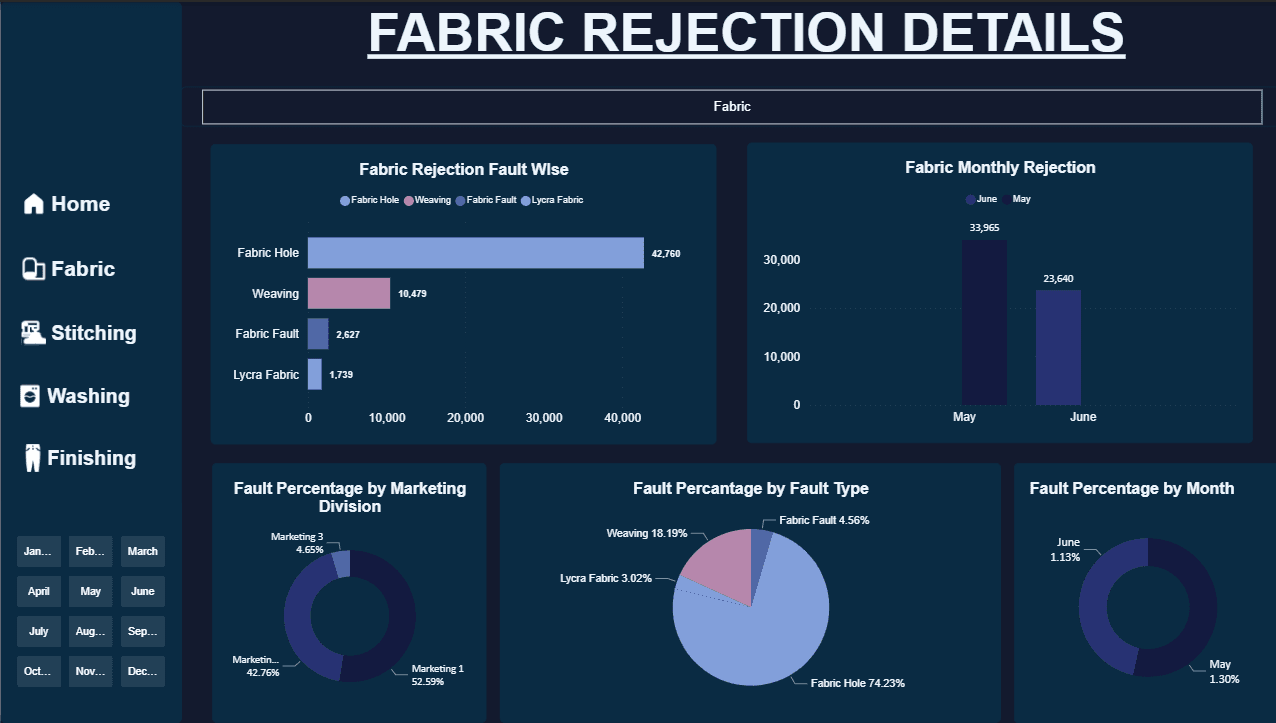
Rejection Dashboard Automation
Project: Defect Tracking and Analysis Automation
Overview This project involved transforming a previously manual defect-tracking workflow, which was entirely managed through Excel, into a streamlined, structured process that provides clear insights into defect trends and key performance indicators.
Challenge Before automation, defect data was manually compiled from multiple sources into spreadsheets. This process was time-consuming, prone to human error, and offered limited ability to identify recurring issues or generate timely performance summaries.
Solution I designed and implemented a new reporting structure to systematically capture and analyze defect data. The process now includes:
-
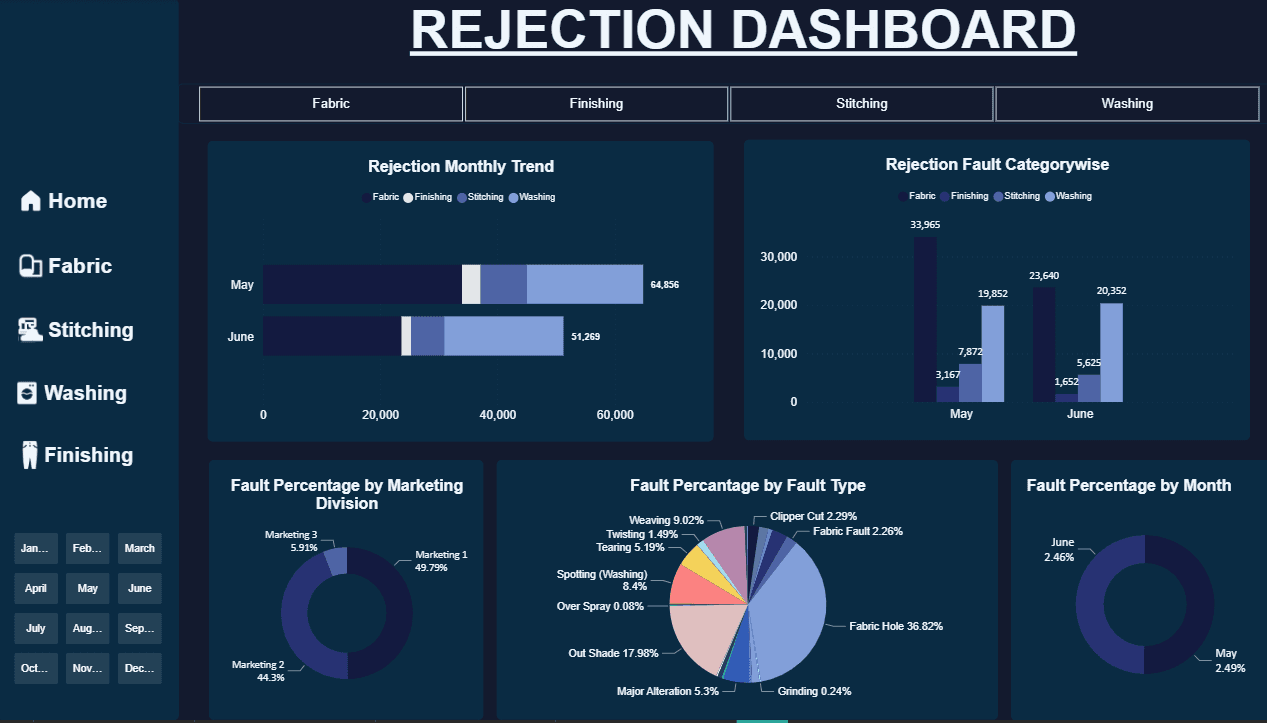
Defect Name Summary – Comprehensive list of all identified defect categories with occurrence counts.
-
Top 5 Defects – Highlighting the most frequent and impactful issues.
-
Monthly Defect Trends – Tracking how defect counts change over time to identify seasonal patterns or process-related spikes.
-
Insights & Recommendations – Summarizing actionable steps for defect prevention and process improvement. Key Outcomes
-
Provided management with clear, visual summaries of defect patterns for faster decision-making.
-
Identified high-impact categories that accounted for the majority of issues.
-
Reduced analysis time by replacing manual compilation with a structured reporting workflow. Impact The improved reporting method enables proactive problem-solving and more efficient allocation of quality control resources, paving the way for continuous improvement initiatives.